
When a small business begins importing or exporting larger quantities of stock, delivery costs can quickly eat into its margins. Air freight may provide speed, but paying for that speed is not always commercially sensible, particularly when products are bulky, heavy or relatively inexpensive.
Sea freight offers a slower but often much more economical alternative. It allows businesses to move substantial volumes internationally without placing the same pressure on the cost of each unit. With good forecasting and support from an experienced fulfilment partner, smaller companies can use sea freight without needing to fill an entire container or manage every stage themselves.
What is sea freight?
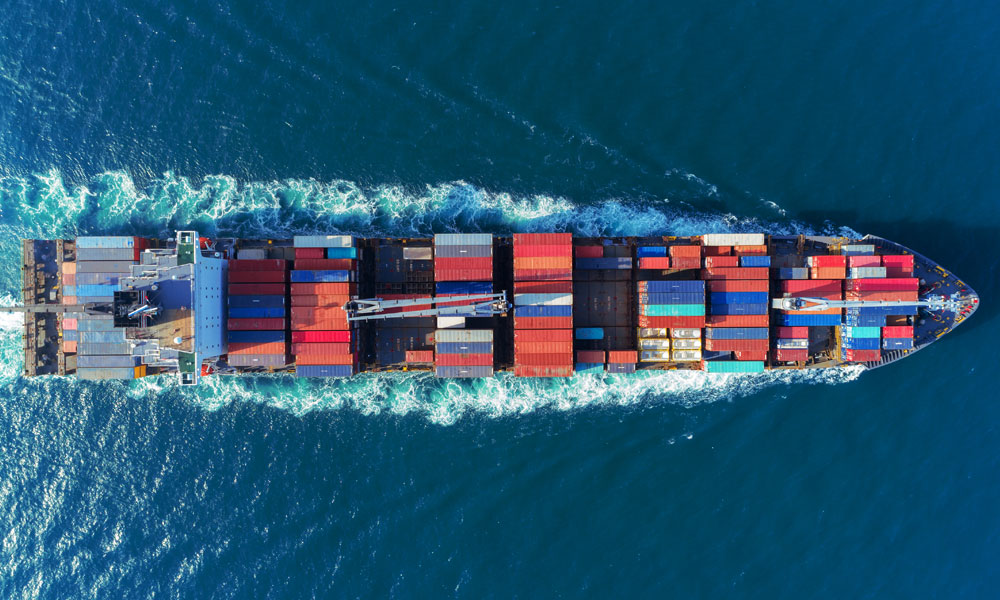
Sea freight is the movement of goods between ports on cargo ships. Products are normally packed into shipping containers, either as a full load belonging to one customer or as part of a shared container carrying goods for several businesses.
The price is influenced by factors including the shipment’s size, weight, route, container type and any additional handling required. Charges may also apply at the departure and destination ports, alongside customs clearance, documentation, collection and final delivery.
Sea freight forms an essential part of worldwide shipping because it can carry quantities that would be expensive or impractical to transport by air. It is commonly used for furniture, machinery, building materials, packaged consumer goods, homeware, clothing and other non-perishable products.
For a small business, its principal advantage is the ability to reduce transportation costs per item when ordering or sending stock in larger volumes.
Comparing sea, air and road transport
Each freight method has different strengths, so the right choice depends on the route, product, deadline and available budget.
Air freight is generally the fastest option for international shipments. It can be appropriate for urgent stock, samples, high-value products or relatively light consignments. However, capacity is limited and charges can become expensive as the shipment grows in size or weight.
Sea freight takes longer, often requiring several weeks between booking and final delivery. Exact timings depend on the ports, sailing schedule, route, customs procedures and inland transport arrangements. Businesses must also allow time for possible congestion, adverse weather or changes to shipping schedules.
The cost difference can make the wait worthwhile. A large consignment that would be prohibitively expensive by air may become commercially viable when transported by sea.
Road freight is often the practical choice for domestic deliveries and many movements between the UK and continental Europe. It can provide flexible door-to-door transport without transferring goods between aircraft or ships. However, road freight cannot cover intercontinental routes independently and may become less economical over long distances or for very large volumes.
In many global logistics operations, these methods work together. Goods might travel by road from a factory to a port, cross an ocean by ship and complete the journey by road to a fulfilment centre.
When slower shipping makes financial sense
Sea freight is particularly attractive for products where delivery speed is less important than controlling the landed cost. The landed cost is the complete expense of getting an item from its source to its final destination, including transport, duties, taxes, handling and related charges.
Lower-margin products need especially careful planning. If the freight cost attached to each unit is too high, the business may have to raise prices or accept reduced profit. Moving more units together by sea can spread transportation and handling costs across a larger quantity of stock.
Bulky products can also benefit. Air freight pricing may reflect both actual weight and the amount of space a consignment occupies. Lightweight but large items can therefore be surprisingly expensive to fly.
Sea freight is most effective when demand can be forecast in advance. A retailer ordering seasonal stock several months before it is required has more flexibility than one trying to replace an item that has already sold out. Reliable sales data, purchasing schedules and inventory alerts make it easier to accommodate longer transit times.
Understanding full container loads
A full container load, commonly shortened to FCL, means that one business books an entire container. The container does not necessarily have to be filled completely, although using the available space efficiently will provide better value.
Standard dry containers are commonly available in 20-foot and 40-foot sizes. Larger high-cube containers offer additional internal height and can be useful for voluminous products. Other designs are available for goods with specialist requirements, including temperature-controlled cargo or unusually shaped equipment.
FCL shipments often involve fewer handling stages because the container can remain sealed between loading and arrival, subject to customs or security checks. This may reduce the risk of goods being misplaced or damaged during transfer.
Booking a full container can become economical once a shipment reaches a sufficient volume. However, small businesses should compare the complete cost rather than assuming that a partly filled container will automatically offer the best price.
Sharing space with other shipments
A less-than-container load, or LCL, allows a business to pay for part of a container. Its goods are consolidated with shipments from other customers travelling to the same destination.
This makes sea freight accessible to companies that cannot justify a full container. It is useful for regular stock orders, trial quantities or businesses expanding into a new international market without committing to very large volumes.
LCL shipping may take slightly longer because the separate consignments must be collected, consolidated and later separated at the destination. Additional handling can also create different cost and packaging considerations.
Goods should be packed securely and clearly labelled because they will share space with other cargo. A global logistics provider can advise on measurements, documentation and whether LCL or FCL offers better overall value for a particular shipment.
How consolidation creates savings
Consolidation is one of the most useful ways for smaller businesses to reduce freight costs. Instead of sending several small consignments separately, orders can be brought together and transported as one larger shipment.
A fulfilment partner may consolidate goods from multiple suppliers, manufacturers or purchase orders before arranging onward transport. This can reduce repeated collection, handling and administration charges. It may also allow a business to access more competitive freight rates than it could obtain when booking each consignment individually.
For example, a retailer sourcing products from several factories in the same region might arrange for the goods to be delivered to a consolidation point. The items can then be checked, combined and loaded into one shipment bound for the UK.
Consolidation must be planned carefully. Delays affecting one supplier could hold up the entire shipment, while incomplete or inaccurate paperwork can cause difficulties at the port. Clear deadlines and visibility across the supply chain are therefore essential.
Planning stock around longer transit times
The savings offered by sea freight can disappear if poor planning leads to stock shortages and emergency air shipments. Businesses should work backwards from the date on which inventory is required, allowing time for production, collection, port handling, the sailing itself, customs clearance and final delivery.
Holding a sensible amount of safety stock can protect against unexpected delays. However, ordering excessive quantities creates storage costs and ties up working capital. The objective is to find a balance between transport efficiency and healthy inventory levels.
Some businesses use a hybrid model. Core stock travels by sea, while smaller quantities of urgent, high-demand or newly launched products move by air. This maintains availability without paying premium freight rates across the entire range.
Looking beyond the headline price
A sea freight quotation should be considered as part of the complete journey. Port charges, customs services, insurance, storage, documentation and delivery to the final address can all affect the total.
Businesses must also provide accurate information about the goods, including their value, origin, classification and any restrictions. Packaging must be suitable for prolonged transport, movement within the container and changes in temperature or humidity.
Working with a provider experienced in worldwide shipping can make these responsibilities more manageable. A single partner may coordinate collection, freight, clearance, storage and fulfilment, giving the business better visibility and fewer separate relationships to manage.
Making sea freight work for your business
Sea freight is not the right answer for every shipment. It is unsuitable for urgent orders and may not benefit very small consignments once all charges are considered. For bulky goods, predictable stock movements and lower-margin products, however, slower transport can deliver substantial savings.
The key is to plan around the full supply chain rather than the sailing time alone. By comparing container options, consolidating orders and maintaining accurate inventory forecasts, small businesses can make confident decisions about when to use sea, air or road freight.
With the right global logistics support, sea freight becomes more than a method of moving large shipments. It becomes a practical way to protect margins, increase purchasing flexibility and build a more scalable international supply chain.