
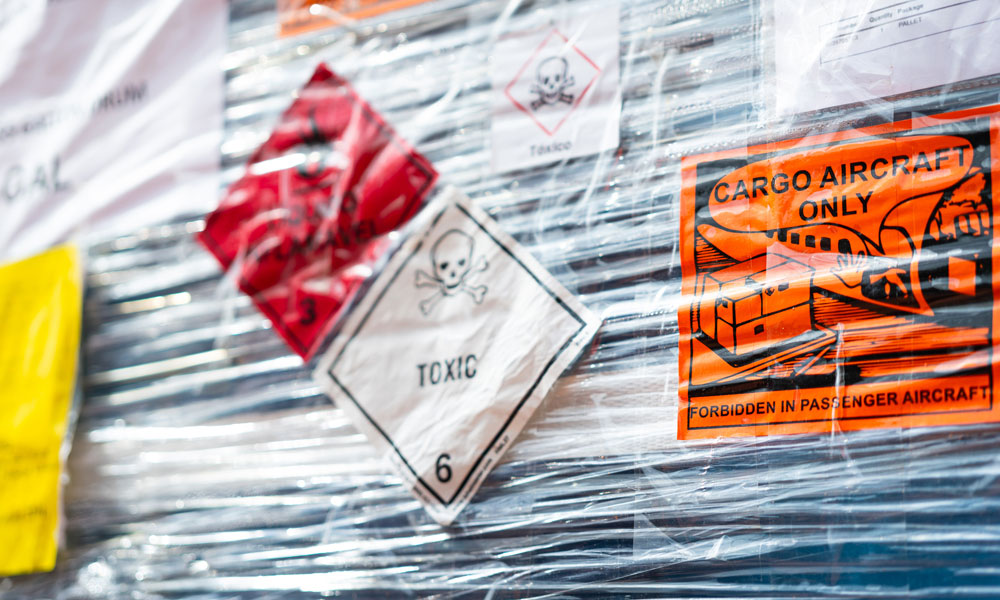
Many products sold by small businesses appear harmless in everyday use but are treated differently when transported. A bottle of perfume, an aerosol deodorant, a power bank or a tin of paint may present a fire, pressure, corrosion or chemical risk during a journey.
These products may be classed as dangerous goods or restricted items. That does not always mean they cannot be shipped, but they may require approved packaging, specific labels, additional paperwork and a carrier authorised to accept them.
For SMEs using an ecommerce courier or arranging global delivery, identifying these products before dispatch is essential. Incorrectly declared goods can be refused, delayed, returned or destroyed. More importantly, unsuitable packing can endanger drivers, warehouse teams, aircraft crews and other shipments.
What are dangerous goods?
Dangerous goods are substances or articles capable of presenting a risk to health, safety, property or the environment during transport. Regulations place them into classes according to the type of hazard involved, such as flammable liquids, gases, corrosive substances, toxic materials or explosives.
A product does not need to look industrial or dangerous to fall within these rules. Many familiar consumer items contain regulated materials. Examples can include perfumes, nail varnish, adhesives, cleaning chemicals, pesticides, paints, fuel-powered equipment and some medical products.
Restricted items form a broader category. A carrier may restrict a product because of transport regulations, security concerns, destination-country laws or its own operating policies. Certain goods may be accepted by one service but prohibited by another.
Businesses should never assume that a product is permitted simply because it arrived from a supplier through a parcel network. The original sender may have used a specialist service, different packaging or documentation that is not visible to the recipient.
Why batteries need particular attention
Lithium batteries are found in phones, laptops, cameras, tools, toys, power banks and many other products. They can overheat or catch fire if damaged, defective, poorly manufactured or packed incorrectly.
The shipping rules can depend on the type of battery, its rating, the number being sent and whether it is installed in equipment, packed alongside equipment or transported separately. A phone containing a battery may therefore be treated differently from a box of replacement batteries.
Damaged, swollen or recalled batteries can face much tighter restrictions and may be prohibited from standard transport services altogether. Businesses handling returns must be especially careful, as a customer may send back a device because its battery has developed a fault.
Before booking, provide the carrier with accurate battery specifications. These may include the battery chemistry, watt-hour rating and configuration within the shipment. Manufacturers or suppliers should also be able to provide relevant testing and product information.
Aerosols, perfumes and pressurised products
Aerosols are pressurised containers, and their contents may also be flammable. Common examples include deodorants, hairsprays, cleaning sprays, lubricants and spray paints.
Perfumes, aftershaves and some cosmetic products can contain enough alcohol to be treated as flammable liquids. This means a beauty or lifestyle retailer may be shipping dangerous goods without considering itself a chemical business.
Temperature, pressure and physical damage can affect these products during transport. Caps should be secured, accidental discharge prevented and containers protected from movement. Simply placing an aerosol in an ordinary mailing bag is unlikely to provide suitable protection.
Quantity limits and carrier acceptance rules vary by service and destination. Businesses should check each product rather than applying one decision to an entire cosmetics, cleaning or personal-care range.
Chemicals and products containing chemicals
Chemicals cover an enormous range of products, from industrial substances to household cleaners, resins, inks, oils and adhesives. Their transport classification depends on their properties rather than their everyday purpose.
A Safety Data Sheet, often called an SDS, is an important starting point. This document should provide information about the product’s hazards, composition, handling requirements and transport classification. Section 14 commonly contains transport information.
The details may include a UN number, proper shipping name, hazard class and packing group. These are not interchangeable descriptions. They help determine how the goods must be declared, packed, labelled and handled.
If the information is incomplete, unclear or unavailable, the sender should consult the manufacturer, supplier or a qualified dangerous goods specialist. Guessing from a product name or online photograph is not sufficient.
What paperwork might be required?
The exact documents depend on the product, quantity, transport method and destination. A dangerous goods transport document or declaration may be required, particularly for air, sea or certain road shipments.
Information commonly requested includes the UN number, proper shipping name, hazard class, packing group, number and type of packages, total quantity, and sender and recipient details. Some shipments may also require emergency contact information or additional declarations.
International orders still need the usual customs paperwork. A commercial invoice should describe the goods accurately and include their value, origin and commodity code where required. Describing a regulated product vaguely as “samples”, “accessories” or “gift” can lead to delays and compliance problems.
Documents must match the physical shipment. Inconsistent quantities, labels or product descriptions can cause the carrier or customs authorities to stop the consignment.
Why specialist packaging matters
Dangerous goods packaging is designed to contain the product and withstand the conditions it may encounter during transport. Depending on the classification, it may need to meet specific performance standards.
The packaging could involve approved outer boxes, leakproof inner containers, cushioning, absorbent material, terminal protection or separation between incompatible products. Packages may also require hazard labels, handling marks, orientation arrows and the relevant UN identification.
Suitable packaging cannot be chosen on appearance alone. A strong-looking box is not automatically approved for a particular dangerous substance or weight.
Lithium battery shipments may require protection against short circuits and accidental activation. Liquids need secure closures and may require secondary containment. Aerosols must be prevented from moving or discharging inside the package.
A specialist packing provider can interpret the classification and prepare the consignment for the intended route and transport mode.
Choosing a compliant carrier
Not every ecommerce courier accepts dangerous goods, and those that do may only carry selected classes, quantities or destinations. Acceptance can also differ between road, air and sea services.
The sender should disclose the product before requesting a final quotation. Hiding its contents to obtain a cheaper or faster service creates serious safety risks and may invalidate insurance.
A global delivery partner with access to multiple carriers can identify an appropriate service and explain the information required. It can also help coordinate collections, paperwork and specialist handling.
However, the sender retains important responsibilities. The business must provide accurate product data and ensure that employees involved in classification, packing or documentation have suitable knowledge and training for their roles.
Building a safer shipping process
SMEs should maintain a record of products that are dangerous, restricted or prohibited on particular services. Product listings, warehouse systems and packing instructions can then flag these orders before a label is produced.
Staff should know not to dispatch an unfamiliar liquid, battery or aerosol without checking it. Returns procedures should also ask customers about damage, leakage or battery faults before collection is arranged.
Rules can vary by carrier, destination, quantity and transport mode, so previous acceptance does not guarantee that the next shipment will be permitted.
By checking classifications early, using compliant packaging and choosing an authorised carrier, businesses can prevent avoidable delays and protect everyone handling their goods. Careful preparation makes global delivery safer while giving customers a more reliable experience.