
The last mile is often where delivery performance is won or lost. You can have an efficient warehouse, accurate picking and packing, and a strong line-haul network, but if the final handover to the customer is inconvenient or unreliable, the whole experience can still fall short. That is why more brands are taking a closer look at the delivery choices they offer at checkout.
Home delivery is still the default for many online orders, but it is no longer the only option customers expect. Parcel shops, lockers and click-and-collect services are now a normal part of the buying journey for many shoppers, especially those balancing work, travel and changing schedules. For businesses, that creates a real opportunity. Offering more last-mile options can reduce failed deliveries, improve convenience and support broader sustainability goals at the same time.
For growing e-commerce brands, this is not just a customer service issue. It is a strategic one. The right last-mile mix can help reduce avoidable costs, improve customer satisfaction and make your delivery proposition more competitive. A strong fulfilment partner can play a major role here, especially if you are also managing cross-border orders and using global express worldwide services alongside domestic delivery options.
Why last-mile choice matters so much
Customers do not all live or shop in the same way. Some are at home during the day and are perfectly happy to receive a parcel at the door. Others are out at work, commuting, travelling between sites or juggling family schedules that make home delivery less practical. If the only option available is delivery to a residential address during standard hours, many of those customers are more likely to miss the parcel or feel frustrated by the process.
That is why last-mile flexibility matters. It allows businesses to match delivery methods to real customer behaviour instead of forcing everyone into the same pattern. It also helps manage one of the most expensive and frustrating parts of delivery operations: failed first attempts.
A failed delivery does not just inconvenience the customer. It creates additional handling, extra route pressure, more customer service queries and a higher overall delivery cost. The more businesses can do to improve first-time success, the stronger the operation becomes.
Home delivery: convenient, familiar and still essential
Home delivery remains the most recognisable last-mile option and, for many customers, it is still the most appealing. It is easy to understand, requires no extra journey from the buyer and fits naturally with the convenience that online shopping promises.
For bulky items, repeat purchases, subscription orders or products that customers do not want to carry, home delivery often makes the most sense. It can also feel more premium when paired with timed slots, tracking updates and a smooth proof-of-delivery experience.
The downside is that home delivery can be vulnerable to missed drops, safe-place disputes and redelivery costs. If the customer is not in, the process can quickly become less efficient for everyone involved. This is particularly true in urban areas, apartment blocks or households where no one is available during the day.
That does not mean home delivery should be reduced. It means it should be part of a broader mix. For many brands, it will remain the core option, but not the only one.
Parcel shops: practical and widely accessible
Parcel shops offer customers the chance to collect deliveries from local convenience stores, newsagents or other retail collection points. For many people, this is a very practical middle ground between home delivery and more self-service collection methods.
The biggest advantage is flexibility. Customers can often collect at a time that suits them, including evenings or weekends, without waiting in at home. This can be especially useful for those with unpredictable working hours or shared living arrangements where home receipt is less reliable.
Parcel shops can also help reduce failed delivery attempts because the parcel goes directly to a staffed location rather than to an empty house. That can improve overall efficiency and reduce the support burden for retailers.
The drawback is that it still requires the customer to make an extra trip. For some, that is no issue. For others, it may feel less convenient than direct home delivery. Much depends on how close the shop is and whether the opening hours suit the customer’s routine.
Lockers: speed, flexibility and low-contact collection
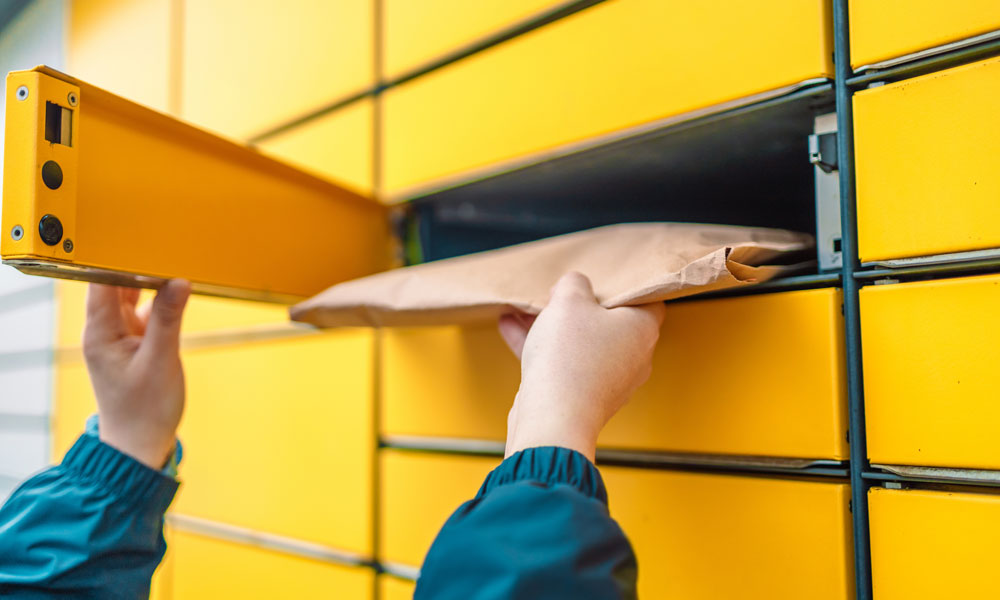
Lockers have become increasingly popular because they combine convenience with independence. Customers can collect parcels from secure automated units at transport hubs, supermarkets, petrol stations and other high-footfall locations. In many cases, this suits modern shopping habits extremely well.
The appeal is obvious. Lockers can often be accessed early in the morning or late at night, allowing customers to collect when it suits them rather than when a driver happens to arrive. This can be ideal for commuters, urban shoppers and anyone who wants a quick, low-contact handover.
From an operational point of view, lockers can reduce failed deliveries and concentrate multiple handovers into a single location. That can support route efficiency and lower the number of repeated doorstep attempts.
The limitation is capacity and parcel size. Not every consignment is suitable for a locker, and not every destination has strong locker coverage yet. Some customers also prefer the reassurance of a staffed collection point rather than an automated one. Even so, lockers are becoming an increasingly important part of a flexible last-mile strategy.
Click-and-collect: strong for retail-led brands
Click-and-collect is slightly different because it usually relies on the retailer’s own store network or collection points. For businesses with physical locations, it can be a highly effective option. It allows customers to order online and pick up in person, often on their own schedule.
This can be especially attractive for shoppers who want certainty, speed or the chance to combine collection with another trip. It can also drive footfall into stores and create opportunities for additional purchases.
For retailers, click-and-collect can reduce some last-mile delivery costs altogether, depending on the model. It can also create a more direct brand experience because the handover happens within your own environment rather than through a third-party network.
The downside is obvious: it only works where physical collection infrastructure exists. It also depends on stock visibility, store processes and internal coordination being strong enough to support it.
How more options improve performance
Offering more than one last-mile method is not about adding complexity for the sake of it. It is about reducing friction. When customers can choose the option that best suits their lives, they are more likely to complete the purchase and less likely to run into delivery problems afterwards.
This can reduce failed deliveries, cut redelivery costs and improve customer satisfaction. It can also help manage expectations more effectively. A shopper who knowingly selects a locker or parcel shop is less likely to be frustrated by not receiving the parcel at home, because the process was designed around their preference from the outset.
This is where the right fulfilment partner becomes especially valuable. A capable provider can help brands offer a broader mix of carrier services, collection methods and last-mile routes without forcing the business to manage every detail manually. That flexibility matters even more when domestic and international deliveries sit side by side in the same operation.
The sustainability argument
Last-mile options can also support sustainability goals. Repeated home delivery attempts, fragmented routes and low drop-density all add emissions and inefficiency. Consolidating deliveries through parcel shops, lockers or collection points can reduce wasted journeys and improve route productivity.
That does not mean every alternative is automatically greener in every case. Much depends on network design, customer travel behaviour and local geography. But in many situations, giving customers access to consolidated collection options can support a more efficient final mile than repeated door-to-door attempts.
For brands that care about environmental messaging, offering these choices can be a practical step rather than just a statement.
A smarter last-mile strategy for modern delivery
There is no single best last-mile option for every order. Home delivery remains essential. Parcel shops offer practical flexibility. Lockers bring speed and convenience. Click-and-collect can be highly effective for retail-led businesses.
The real advantage comes from offering a sensible combination. That helps customers choose what works for them, reduces delivery friction and creates a more resilient operation overall. For businesses working with a fulfilment partner and managing everything from UK parcel flows to global express worldwide shipments, that kind of flexibility can make a meaningful difference.
The final mile is not just the end of the journey. It is one of the most visible parts of your customer experience. Giving customers better choices there is often one of the smartest delivery decisions a brand can make.